Free & Cheap Onsen in Beppu: A Local's Budget Guide
From ¥100 neighbourhood baths to a completely free city-run onsen — Beppu's public bath scene is unlike anywhere else in Japan.
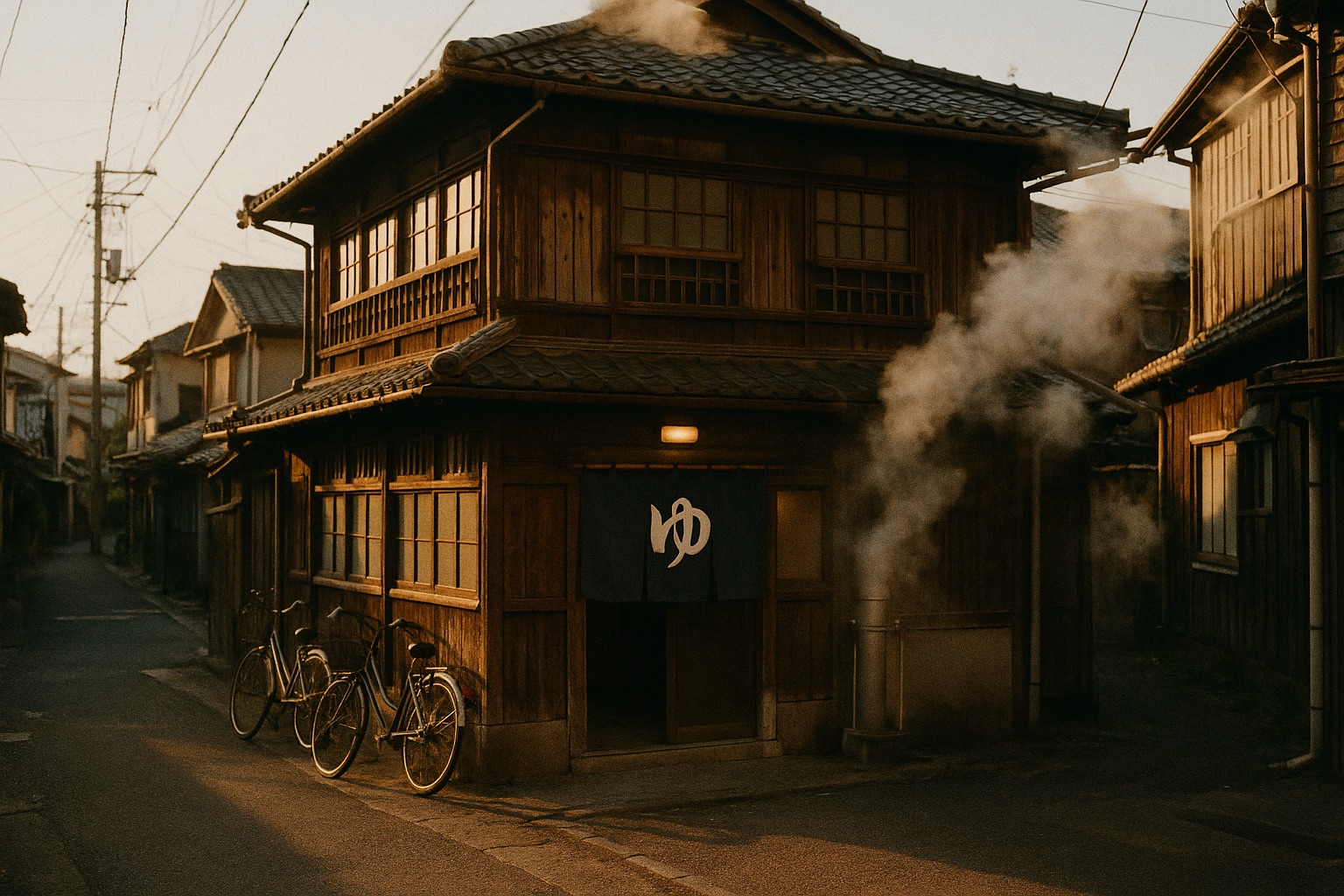
✦ AI-generated illustration — not a photograph of the actual site
Quick Facts
Public baths in Beppu
~100
Cheapest entry
Free
Most common price
¥100–¥300
Tattoos allowed
All 17 city baths
Best for first-timers
Takegawara
Best free option
Atsunoya (Kannawa)
Most travel guides point you toward Beppu's famous jigoku— the seven “hells” that bubble and steam in shades of red and blue. Those are worth seeing. But the Beppu that locals actually use looks completely different.
Across the city, there are nearly 100 public baths — called kyōdō-yokujō (共同浴場) — tucked into neighbourhood streets, most of them costing ¥100 to ¥300. A few cost nothing at all. These are not tourist attractions. They are working bathhouses where elderly residents come every morning, where families soak after dinner, where the water is changed daily from natural hot spring sources beneath the city.
I live in Oita Prefecture. This guide is what I would tell a friend visiting Beppu who actually wants to experience the city — not just photograph it.
First: Understanding Beppu's Three Types of Onsen
Not every bath in Beppu works the same way. Before you walk up to a door and push it open, it helps to know what you're dealing with.
City-run baths (市営温泉)
¥200–¥300Recommended for visitorsOperated by Beppu City. There are 17 of them. All are open to everyone — tourists, foreigners, first-timers. These are the safest and most accessible option if you're visiting for the first time.
Neighbourhood baths (ジモ泉 / jimo-sen)
¥100–¥150Check before enteringManaged by local neighbourhood associations. Most allow outsiders, but a few are members-only. You'll know you're not welcome if someone tells you — it's rare, but it happens. Check the city's official onsen map before visiting.
Hotel & ryokan baths
¥500–¥1,500+Skip for authenticityThe polished, tourist-facing experience. Clean, often beautiful, and usually bilingual. Fine if that's what you want — but you'll miss what makes Beppu special.
The Free Ones
Yes, completely free.
♨️ Atsunoya — 熱の湯
FREEThe only completely free city-run onsen in Beppu. Atsunoya sits in the Kannawa area — the part of Beppu where steam rises from the roads and the smell of sulphur hangs in the air. It is the oldest bathhouse in Kannawa, and it looks the part: small, plain, functional.
There are no amenities to speak of — no lockers, no shampoo, no dryer. Bring everything yourself. But the water is real, the experience is real, and the price is as real as it gets.
Hours
6:30 AM – 9:00 PM
Entry
Free
Area
Kannawa (鉄輪)
Tattoos
Allowed
🦶 Foot Steam Bath — 足むし湯
FREEOutside the Kannawa Mushi-yu bathhouse (the famous steam bath that costs ¥700 for a full session), there is a covered wooden bench where you can steam your feet for free. You sit, roll up your trousers, and let the natural steam rise around your feet and ankles.
It sounds minor. It isn't. The steam here reaches around 50°C and the effect after ten minutes is surprisingly intense — your legs feel warm for the next hour. This is a good first stop if you're nervous about full onsen bathing, or travelling with children who can't use the main bath.
Hours
6:30 AM – 8:00 PM
Entry
Free
Area
Kannawa (鉄輪)
Good for
Kids & beginners
The ¥100 Onsen
One hundred yen. That's less than a dollar. In return, you get access to a natural hot spring bath that's been fed by the same geothermal source for decades. Beppu has more ¥100 baths than most cities have coffee shops.
Kannawa Area (鉄輪) — The Best Concentration
Kannawa is the most atmospheric part of Beppu. Steam drifts across the streets. The neighbourhood baths here have barely changed in decades.
| Bath | Price | Hours | Note |
|---|---|---|---|
| Jigoku-bara Onsen (地獄原温泉) | ¥100 | 6:30–21:00 | Drop coins in the offertory box. Classic neighbourhood feel. |
| Shibuno-yu (渋の湯) | ¥100 | 6:30–20:30 | Famous for its bamboo cooling device — look for it above the bath. |
| Shonin-yu (上人湯) | ¥100 | 10:00–18:00 | Buy your ticket at the diner across the road. |
| Tani-no-yu (谷の湯) | ¥150 | 6:30–21:30 | Has been here since the Edo period. One of the oldest in Kannawa. |
| Sunabaru Onsen (砂原温泉) | ¥100 | 8:00–22:00 | Post your fee in the letterbox slot on the door. |
Beppu Onsen Area (Central) — Over 20 Options
The central area around Beppu Station has more than twenty ¥100 baths scattered through residential streets. Most operate split hours — open in the morning, closed midday, open again in the evening. They follow the rhythms of local life, not tourist schedules.
Worth noting:
These baths — Noguchi Onsen, Kasuga Onsen, Tomihisa Onsen and others — are genuinely neighbourhood facilities. Most welcome visitors without issue. A few may be members-only. The rule of thumb: if the door is unlocked and there are shoes outside, you can try entering. If someone waves you away, accept it politely and move on. It's nothing personal.
Worth Every Yen: The Best ¥200–¥300 Picks
🏛️ Takegawara Onsen — 竹瓦温泉
6:30 AM – 10:30 PM · Closed 3rd Wednesday
Built in 1879. The current building dates to 1938 and is registered as a National Tangible Cultural Property. The roof is styled after a kabuki theatre — enormous, curved, dramatic. Inside, the bath itself is simple: two pools of hot spring water in a tiled room. But the building around it is unlike anything else in Japan's public bath world.
💡 Local tip
The sand bath (sunahyu) at Takegawara is one of Beppu's signature experiences — staff bury you up to the neck in naturally heated beach sand for 10–15 minutes. It requires a separate booking and costs ¥1,500. Worth it if you have time.
♨️ Kaimonji Onsen — 海門寺温泉
6:30 AM – 10:30 PM · Closed 2nd Monday
Five minutes on foot from Beppu Station. Two pools: one hot, one slightly cooler. Clean, well-maintained, and more accustomed to visiting tourists than most city baths. If this is your first time using a Japanese public bath, Kaimonji is the right place to start.
💡 Local tip
The cooler pool is around 40–41°C. The hotter one is closer to 44°C. Start with the cooler one — Beppu's water is genuinely hot.
🌙 Hamawaki Onsen — 浜脇温泉
6:30 AM – 1:00 AM · Closed 3rd Monday
One of the very few public baths in all of Japan that stays open until 1 AM. If you're out late in Beppu and want to decompress, Hamawaki is waiting. The water quality is the same as anywhere else in the city — direct hot spring source, changed daily.
💡 Local tip
After 10 PM the crowd thins to almost nothing. You may well have it to yourself.
Bonus: Yufuin's Hidden ¥100 Baths
Yufuin is an hour from Beppu by train. Most visitors come for the boutique shops and ryokan dinners. Few find the public baths hidden at the edge of the resort town.
Shitan-yu — 下ん湯
¥100On the edge of Lake Kinrin, one of Yufuin's most photographed spots. A mixed-gender bath (konyoku) — rare in modern Japan. The wooden building is small and worn. The view is extraordinary.
Kase-no-yu — 加勢の湯
¥100Built in 1881. The oldest public bath in Yufuin. Fifteen minutes on foot from the station through quiet residential streets. Completely unchanged.
How to Use a Japanese Public Bath
The rules are not complicated. What matters is that you follow them — you are sharing a bath with people who use it every day.
Pay at the entrance
Coin slot, offertory box, or a person at a desk (番台). Have exact change ready — most baths cannot make change for large bills. If you're unsure how to pay, follow what the person ahead of you does.
Undress completely in the changing room
There is no swimwear in Japanese public baths. This is non-negotiable. Leave your clothes in a basket or locker (bring your own lock if one is needed).
Rinse yourself before entering the bath
Sit at one of the low shower stations along the wall and wash your entire body. This is not optional — the bath water is shared. Most baths in Beppu do not provide soap or shampoo. Bring your own.
Enter the bath slowly
Beppu's water is hot — often 42–44°C, sometimes higher. Ease in gradually. If there are two pools, start with the cooler one.
Keep your towel out of the water
Small towels can be placed on your head. They should never go into the bath water.
Ask before adding cold water
If the temperature feels too high, you can add cold water — but ask first. A simple gesture toward the tap and a questioning look is enough. Someone will nod yes or shake their head.
🖋️ On tattoos
All 17 city-run onsen in Beppu explicitly allow tattoos — this was formalised ahead of the 2019 Rugby World Cup, which was partly held in Oita. The official Beppu tourism site maintains an up-to-date list of tattoo-friendly facilities. Neighbourhood baths vary — when in doubt, the city baths are a safe choice.
What to Bring
✅ Bring these
- A small towel (tenugui or hand towel)
- Body soap / shampoo
- Small coins (¥100–¥300)
- Change of clothes
❌ Leave behind
- Swimwear (not allowed)
- Large bills (no change available)
- Valuables (few lockers)
- Expectations of a dryer
A Final Note from a Local
The ¥100 baths of Beppu are not preserved for tourists. They exist because people actually use them — every morning, every evening, year after year. That is what makes them worth visiting.
You might feel awkward the first time. That's normal. The regulars have seen first-timers before. Follow the basic rules, be quiet, be respectful — and you'll likely find the experience stays with you long after you leave.
Beppu is one of the few places in Japan where you can soak in a natural hot spring, surrounded by locals, for the price of a vending machine drink. Don't spend your whole visit watching coloured water bubble behind a fence.
Written by
A Local in Oita, Japan
A Japanese local born and raised in Oita, Kyushu. Sharing the Japan that guidebooks miss — from someone who actually lives here.
About this site →More from Japan Local Travel
JR Kyushu Rail Pass: Is It Worth It? A Local's Honest Guide
A local breaks down the JR Kyushu Rail Pass — the 3, 5, and 7-day options, what's covered, real price math for popular routes, how to buy and use it, and the honest answer to whether it's worth it for your trip.
Best Time to Visit Kyushu: A Month-by-Month Season Guide
When should you visit Kyushu? A local walks you through the seasons month by month — cherry blossoms, the rainy season, summer heat, golden autumn, and mild onsen winters — so you pick the right time for your trip.
Driving in Kyushu: Renting a Car & the Best Road Trips
Should you rent a car in Kyushu? A local explains the license you need, what driving here is really like, costs and tolls, where a car beats the train — and the island's most beautiful road trips.