How to Use a Public Onsen in Japan: A Local's Step-by-Step Guide
I've used public baths my entire life — not as a tourist, but as a daily routine. A local from Oita, Japan's onsen capital, explains every step so you can walk in with confidence.
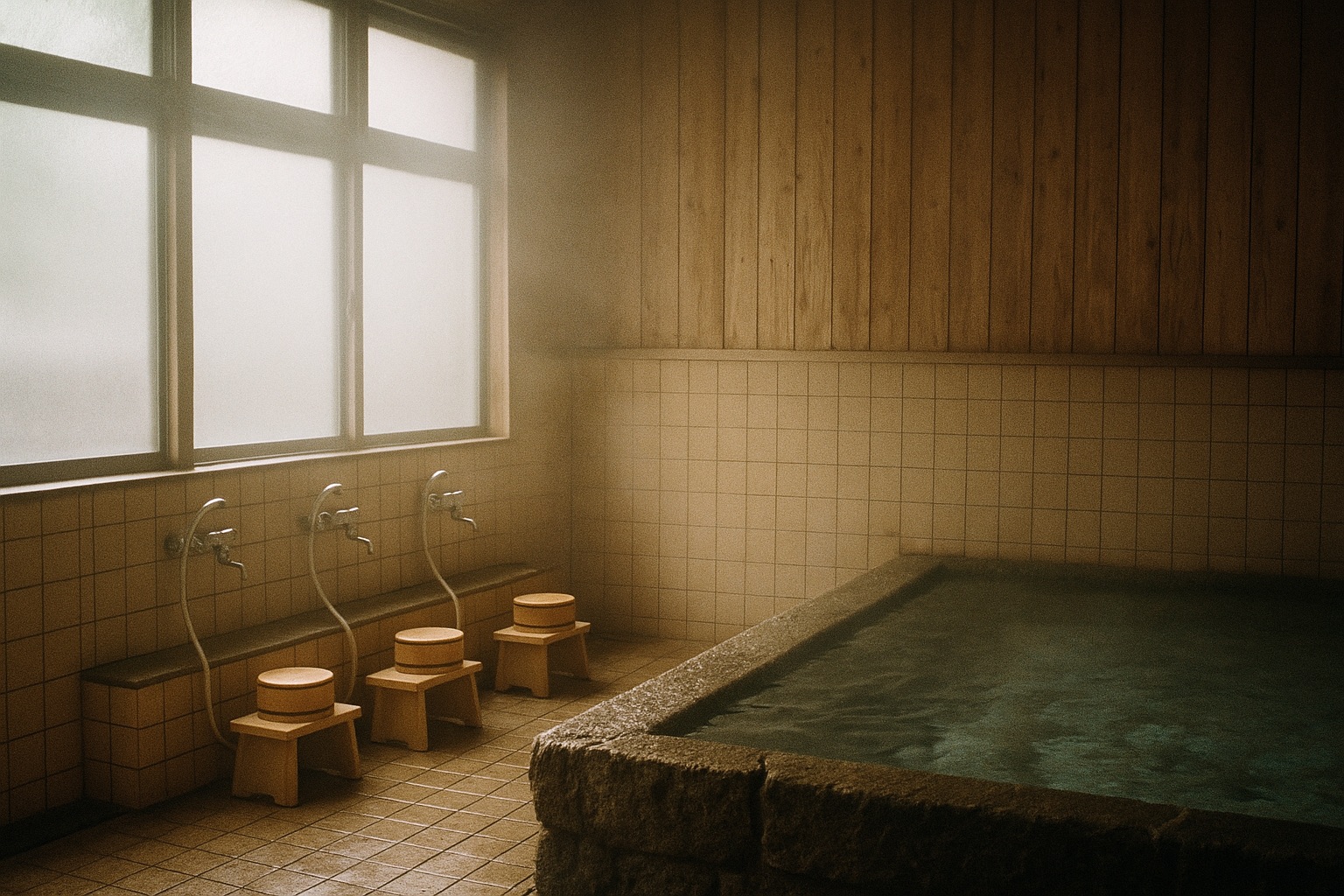
✦ AI-generated illustration — not a photograph of the actual site
Quick Facts
Hot spring volume & sources
#1 in Japan (Oita)
Public baths in Beppu
~130
City bath price
¥110–¥220
Hyotan Onsen
Michelin 3-star (only in Japan)
Tattoos (city baths)
All 17 allow them
Best time to visit
7–9 AM
Source: Ministry of Environment, 2022
In This Article
I grew up in Oita Prefecture — Japan's undisputed onsen capital. Using a public bath is not a leisure activity here. It is how people clean themselves, decompress after work, and start their mornings. I have been going to the same neighbourhood bath since I was a child.
When visitors ask me about onsen etiquette, the guides they show me are usually vague or wrong. So here is what I would tell you if you were a close friend arriving in Oita for the first time — every step, every rule, and the real reason each one exists.
Why Getting This Right Actually Matters
A public bath — called a sento (銭湯) or kyōdō-yokujō (共同浴場) — is a shared community space. It is not a tourist attraction, a spa experience, or a cultural performance for visitors. Elderly residents come every morning. Families soak together every evening. The people around you have been using the same bath for years, sometimes decades.
Getting the basics right means you are genuinely welcome. Getting them wrong does not result in anyone shouting at you — Japanese public life is not like that — but it does affect the experience for everyone in the bath. The regulars notice.
The rules exist for real reasons. This is not bureaucratic formality designed to inconvenience foreigners. The bath water is shared and not chlorinated like a pool. Cleanliness depends entirely on the people using it. The customs around silence exist because the bath is genuinely a place where people recover, not socialise. Understanding the why behind each rule makes following them effortless.
Before You Even Walk In
A small towel
A tenugui or a regular hand towel. This is the most commonly forgotten item. You use it to wash at the karan station and to dry off. Large bath towels do not belong in the bath area.
Soap and shampoo
Most neighbourhood and city-run baths do not provide them. Upscale day-use facilities at hotels and ryokan usually do. When in doubt, bring your own. A small travel set is enough.
Cash — specifically coins
Most neighbourhood baths are cash only. Many cannot break large bills. Have ¥100–¥500 coins with you. Prices: neighbourhood baths ¥100–¥300; city-run baths ¥200–¥300; tourist facilities ¥500–¥1,500+.
Tattoo policy check
Varies by facility — three different patterns exist (covered in detail below). If you have tattoos, check before you go. A quick search of the facility name on Google Maps, or calling ahead, takes two minutes.
Nothing else
No swimwear — it is not used in Japanese public baths. No special equipment. No reservation for most public baths. That is genuinely the full list.
Step-by-Step: What to Do From the Moment You Arrive
Follow these in order. Every step exists for a reason.
Pay at the entrance
The person at the desk is called the bandai (番台). Some baths use a vending machine instead. Have exact change — most cannot break large bills. If you are not sure of the system, watch what the person ahead of you does.
Go to the changing room
Men and women are separated. Look for 男 (men) or 女 (women) signs above the curtained entrances. Use a locker or basket for your clothes. Leave everything except your small towel here.
Take only your small towel into the bath area
Your soap, shampoo, and everything else stays in the changing room or in the small basket most baths provide to carry items to the karan station. Your large bag does not come into the bath area.
Do the kakariyu first — before anything else
Near the bath entrance you will find a tap or small basin. Scoop hot water over your body three to five times. This is called kakariyu (かかり湯) or kakeyuu, and it is the single most important step. See the next section for exactly why.
Sit at a karan station and wash thoroughly
The low shower stations along the wall are called karan (カラン). Sit on the small stool, use your soap and shampoo, and wash your entire body and hair. The bath is for soaking — not for washing. Washing happens here first.
Enter the main bath slowly
Beppu's water is often 42–44°C, sometimes higher. Ease in gradually. If there are two pools, start with the cooler one. Your body needs a moment to adjust.
Keep your small towel out of the water
Fold it on top of your head or set it on the edge of the bath. It does not go into the water.
Dry off before returning to the changing room
When you are done, go back to the karan station if you need to rinse. Then towel off thoroughly before you walk back through the curtain into the changing room. Do not drip water everywhere.
The One Rule That Matters Most (And Why)
The kakariyu (かかり湯, also written かけ湯) is the pre-bath rinse — scooping hot water over your body from the tap near the bath entrance before you get in. This is the single rule that matters most, and it is also the one most commonly skipped by first-timers.
Here is why it exists: the bath water is shared and not chlorinated the way a swimming pool is. It is changed daily, but its cleanliness between changes depends entirely on everyone who enters being clean first. In Japan, the bath is for soaking and relaxing — not for washing. Washing happens at the karan stations. Entering without the kakariyu is the equivalent of walking into a shared drinking cup without rinsing it first.
Locals notice immediately when someone skips this step. It is not a formality. It is the foundational hygiene practice that makes shared bathing work.
One note on this:
The regulars at a neighbourhood bath in Oita understand that foreign visitors may not know this custom. Most people are not there to police anyone — they are there to soak. But making the effort shows that you understand where you are and who you are sharing the space with. That matters.
What About Tattoos? The Honest Answer
Strict ban
No visible tattoos at all. Posted clearly at the entrance — usually a sign showing a crossed-out tattoo illustration. This is less common in Oita than in other parts of Japan, but it exists.
Unofficial tolerance
Not explicitly banned, but staff may ask you to cover visible tattoos with bandages. The policy is unstated and inconsistent. When in doubt, bring skin-tone bandage tape.
Officially welcome
A posted sign or website confirmation explicitly stating tattoos are permitted. In Beppu, all 17 city-run onsen fall into this category — formalised ahead of the 2019 Rugby World Cup held partly in Oita.
For neighbourhood baths outside the city-run system, policies vary. Check Google Maps reviews or the official Beppu City onsen map — available at tourist information offices — before visiting a specific bath.
If you are unsure, call ahead. The phrase タトゥーは大丈夫ですか?(“Tattoo wa daijoubu desu ka?”) at the front desk is enough. A yes or no answer requires no Japanese.
The Beppu City tourism office maintains an up-to-date list of tattoo-friendly facilities. This is the most reliable source because individual bath policies can change.
Types of Onsen You'll Encounter in Oita
市営公衆浴場
City-run public baths
Operated by the city. In Beppu, there are 17 of them. All are open to everyone — tourists, first-timers, foreigners. Tattoos are officially allowed at all 17. Basic facilities, real hot spring water, consistently clean.
共同浴場
Neighbourhood baths (jimo-sen)
Managed by local neighbourhood associations. Most welcome visitors without any issue. A small number are members-only — if someone tells you so, accept it and move on without taking offence. Very basic facilities. The water and the experience are the same quality as anywhere else in Oita.
日帰り入浴
Day-use at ryokan and hotels
More comfortable surroundings, often bilingual signage, towel rental available. The gentler introduction if you want to try a public bath without the neighbourhood-bath atmosphere. You will pay more and get a more managed experience.
貸切風呂
Private rental baths (kashikiri-buro)
Reserve an entire bath for your group alone. Popular with couples and families with small children. Eliminates any anxiety about shared nudity. Available at many hot spring hotels and some standalone bath facilities in the Beppu and Yufuin areas.
Local Tips Nobody Else Tells You
7–9 AM is the best time
The water is freshest — changed the night before or early that morning. The bath is quietest. The steam has not built up. If you are going once and want the optimal experience, go early on a weekday morning.
Weekday evenings 4–6 PM for authenticity
The regulars come. You will be surrounded by elderly residents who use this bath every single day — some for their entire lives. It is the most genuinely local experience available to a visitor in Oita.
The cheap city baths exist and tourists don't know about them
In the Beppu and Oita City area you can find city-run baths for ¥200 or less. Most visitors have no idea these exist — they go straight to the ¥1,000+ tourist facilities. The water is the same source. The experience is better.
Sit in the changing room for 10 minutes after soaking
Do not rush out immediately. Sitting quietly while your body temperature stabilises before getting dressed is standard practice. Many locals bring a cold drink from the vending machine just outside the entrance. This is the wind-down part of the experience.
Hyotan Onsen is worth visiting despite the cost
Hyotan Onsen (ひょうたん温泉) in the Kannawa area of Beppu is the only Michelin 3-star onsen facility in Japan. It costs ¥740 for adults — more than a neighbourhood bath, less than a hotel day-use. Outdoor baths, steam rooms, a waterfall bath, and a sand bath all in one site. Go once.
Common Mistakes First-Timers Make
Skipping the kakariyu
The most important step and the most commonly skipped. Scoop hot water over your body before entering the bath. Every time.
Bringing a large bath towel into the bath area
Only a small hand towel belongs in the bath room. Large towels stay in the changing room.
Taking out a smartphone in the bath area
Photography is strictly prohibited everywhere in a public bath. No exceptions. The reason is obvious — other people are undressed.
Getting in the water without washing first at the karan station
The kakariyu rinse and the karan wash are two separate steps. Rinsing your body at the entrance tap is not the same as washing at the shower station.
Misusing the cold water bath (水風呂 mizuburo)
If you see a sauna and a cold plunge bath, that cold bath is specifically for cooling down between sauna sessions. The sequence is: sauna → cold bath → rest. Do not use the mizuburo as a general cool-down pool if you have not been in the sauna.
Talking loudly
Public baths in Japan are quiet spaces. Conversations happen in subdued tones if at all. Match that energy from the moment you enter.
Quick Reference Card (Save This)
Everything you need on one card.
✓ Do
- ✓Bring a small towel
- ✓Bring cash (coins)
- ✓Bring soap and shampoo
- ✓Rinse with kakariyu first
- ✓Wash at the karan before entering
- ✓Keep your towel out of the bath water
- ✓Be quiet
- ✓Dry off before returning to the changing room
✕ Don't
- ✕Wear swimwear
- ✕Bring a large towel into the bath area
- ✕Take out your phone
- ✕Enter without rinsing first
- ✕Add cold water to the bath without asking
- ✕Soak with soap still on your body
- ✕Enter if you have an open wound
- ✕Rush
The first time can feel intimidating. But the regulars have seen first-timers before, and most people at a neighbourhood bath in Oita are simply there to soak and relax. Follow the rules, match the quiet atmosphere, and you will find it is one of the most genuinely Japanese experiences available to visitors — for the price of a vending machine drink.
Beppu and Yufuin are different in character — if you are deciding between them, this comparison covers both in detail. But for understanding public bath culture and the daily rhythms of onsen life, Beppu is the right place. There is nowhere else like it in Japan.
Written by
A Local in Oita, Japan
A Japanese local born and raised in Oita, Kyushu. Sharing the Japan that guidebooks miss — from someone who actually lives here.
About this site →More from Japan Local Travel
JR Kyushu Rail Pass: Is It Worth It? A Local's Honest Guide
A local breaks down the JR Kyushu Rail Pass — the 3, 5, and 7-day options, what's covered, real price math for popular routes, how to buy and use it, and the honest answer to whether it's worth it for your trip.
Best Time to Visit Kyushu: A Month-by-Month Season Guide
When should you visit Kyushu? A local walks you through the seasons month by month — cherry blossoms, the rainy season, summer heat, golden autumn, and mild onsen winters — so you pick the right time for your trip.
Driving in Kyushu: Renting a Car & the Best Road Trips
Should you rent a car in Kyushu? A local explains the license you need, what driving here is really like, costs and tolls, where a car beats the train — and the island's most beautiful road trips.