Why Kurokawa Is Different from Beppu and Yufuin
The first thing to understand about Kurokawa Onsen is that there is no train station. You must come by bus or car. That inconvenience is not an accident — it is a filter. The effort required to reach this valley in the mountains of northern Kumamoto means that the people who arrive here wanted to be here.
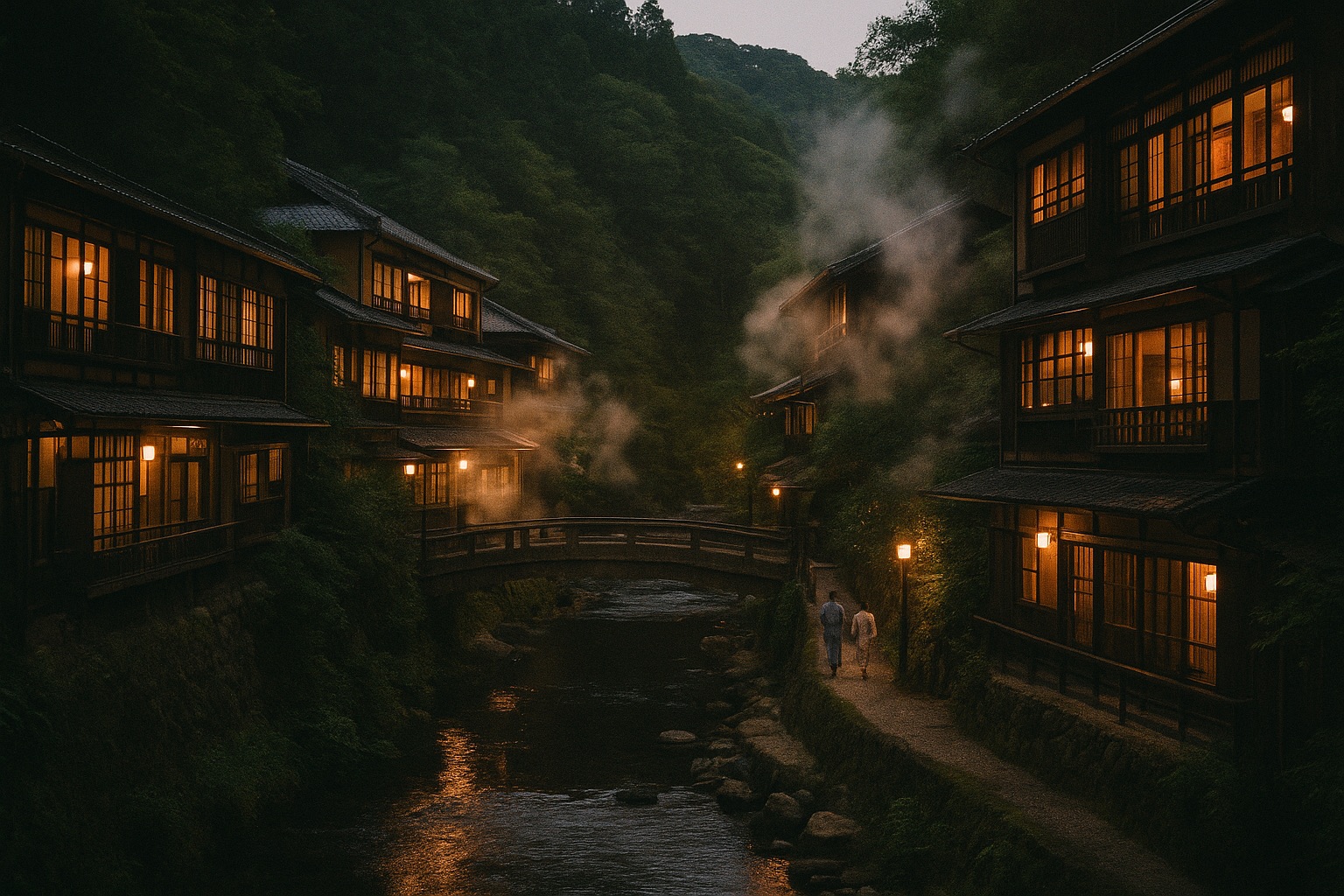
In the 1980s, Kurokawa was a fading village. The ryokan association made a collective decision that would prove to be one of the most thoughtful acts of place-making in modern Japan: no neon signs, no chain hotels, no convenience stores. They would treat the entire valley as a single ryokan, with each inn being a different room. They planted bamboo and trees between buildings, created a single unified aesthetic — dark wood, stone, steam rising from the water. Buildings that didn't fit were hidden behind greenery.
The concept worked. Today Kurokawa is one of the most respected onsen destinations in Japan, without losing the thing that made it worth visiting. The Michelin Green Guide Japan listed it in 2009. Domestic visitors know it well. International travellers are still discovering it.
The "inconvenience" is not a flaw — it is the design. Coming here takes effort, and that effort means you arrive somewhere that hasn't been overrun. If you want to understand what it means to experience onsen as a total environment rather than a single bath, Kurokawa is the answer.
The Nyuto Tegata: Kurokawa's Famous Bath Hopping Pass
The nyuto tegata (入湯手形) is the mechanism that makes Kurokawa's model work for visitors. For ¥1,500 in 2026, it gives you access to the outdoor baths (rotenburo) at any 3 of the 30 participating ryokan in the village. It is valid for 6 months from the purchase date, which means you can spread your 3 visits across multiple trips if you live nearby — or, more practically, use all three in a single day.
You buy it at the front desk of any participating ryokan. You do not need to book in advance or commit to which three inns you'll use when purchasing. The pass comes with a wooden charm that doubles as a souvenir — small, well-made, the kind of thing that actually sits on a shelf rather than ending up in a drawer.
Before you visit, it helps to read up on how to use an onsen — the tegata baths follow the same customs as any Japanese hot spring: no swimwear, wash before entering, tattoos may be an issue at some inns.
Based on multiple visits, here are three ryokan I'd recommend for your tegata:
1. Yamaminzuki (山みず木)
Riverside outdoor bath with the most open-air feel in the village. You're sitting at water level with the stream just below. Best visited in autumn when the surrounding colours are at their peak.
2. Oku-no-yu (奥の湯)
Deep in the forest, this is the most rustic setting Kurokawa offers. No fences visible — just trees and steam. The water quality here is excellent, and the sense of being in the mountains rather than a resort is stronger than anywhere else in the village.
3. Okyakuya (御客屋)
The oldest inn in Kurokawa, established in the Edo period. The history adds something that newer ryokan can't replicate. Water quality is very high. Facilities are simple but well-maintained. Worth including for the context it gives you on what this place originally was.
Practical timing: aim for one morning bath (7–9 AM, when steam is most visible over the outdoor pools), one midday bath, and one late afternoon bath. Three baths in a single day is comfortable. More than that and you'll feel it — pace yourself.
How to Get to Kurokawa Onsen
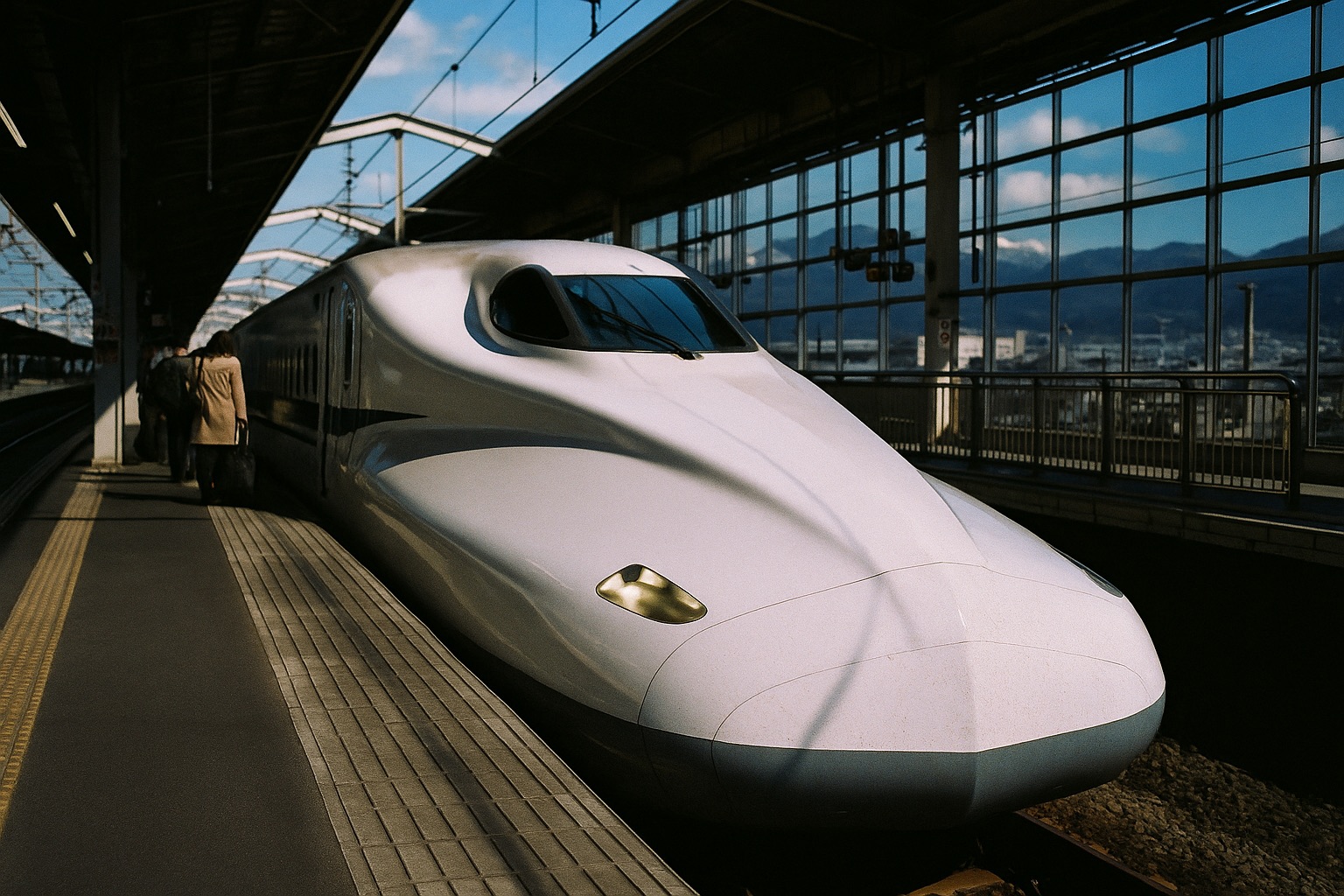
There is no train. This is the most important thing to understand before planning your trip. Every access option involves either a bus with limited daily departures or a rental car.
From Fukuoka (Hakata)
Sanko Bus runs direct services to Kurokawa from Hakata Bus Terminal — roughly 3 buses per day, journey approximately 2.5–3 hours. Advance booking is required. Check the Sanko Bus website or Willer Express for English-language booking. Planning a Fukuoka trip first?
From Kumamoto
Take the JR to Higo-Ozu Station, then connect by local bus. Total journey approximately 2.5 hours. Less convenient than the Fukuoka direct service but viable for those already based in Kumamoto city.
From Beppu / Yufuin (Oita)
The Kyushu Odan Bus (九州横断バス) connects Beppu → Yufuin → Aso → Kurokawa Onsen. This is a seasonal service, running once or twice daily, with some of the most striking mountain scenery in Kyushu. If you're coming from the Oita side, this is the most scenic way to arrive.
By Rental Car (Strongly Recommended)
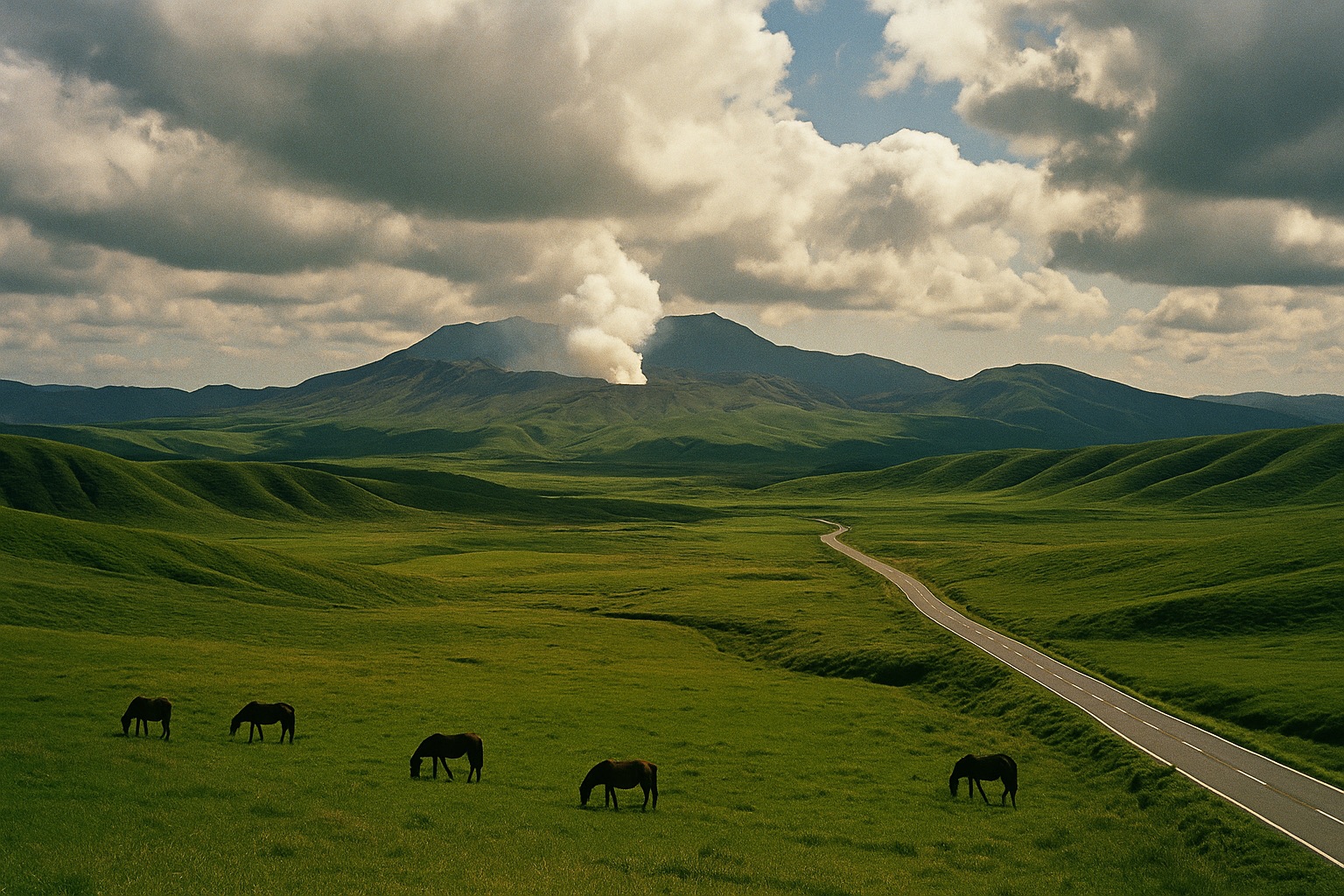
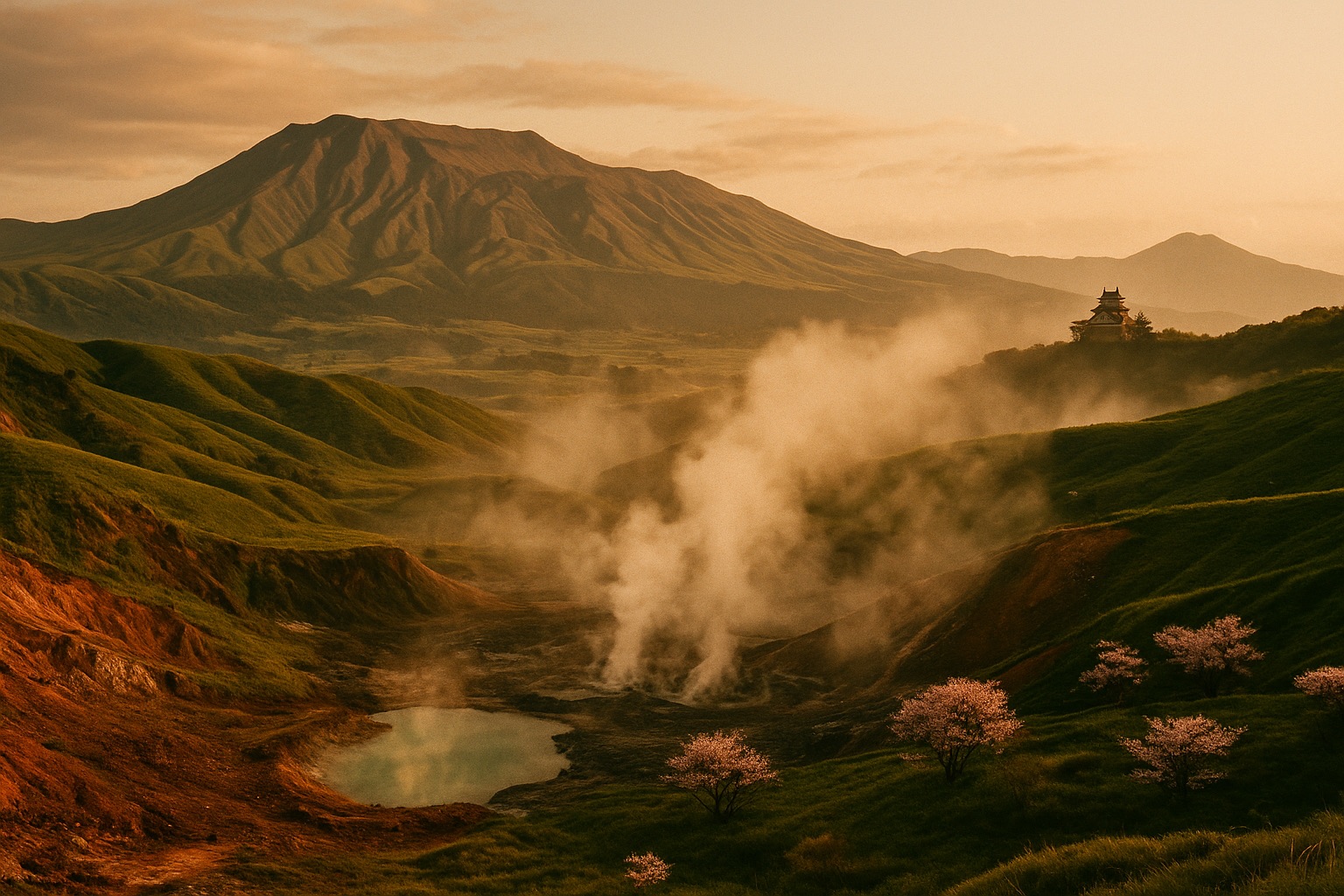
If you're travelling with two or more people, rental car is the best option by a wide margin. It gives you flexibility to combine Kurokawa with Aso (30 minutes away), Yufuin (50 minutes), and the Kuju highlands. The drive through the Aso caldera is extraordinary on its own. Pick up from Kumamoto Airport or Fukuoka and the routing works well.
Key warnings
- All buses operate with limited frequency — typically 3–4 per day. Missing one means waiting hours.
- Book buses in advance, especially in autumn and on weekends.
- Cash is safest on rural buses — IC cards may not work on all routes.
When to Go (And When to Avoid)
Best times
Avoid or plan carefully
A note on 2025–2026: Japan welcomed a record 42.7 million international visitors in 2025. Popular destinations like Kurokawa are significantly more crowded than they were five years ago. Planning and early booking are now essential, not optional.
Staying vs. Day Tripping
Day trip
- Absolutely viable with the tegata pass (¥1,500, 3 baths)
- Combine with lunch — dengaku, onsen tamago, village teahouses
- Allow 5–7 hours in the village
- Take the morning bus, use three baths across the day, leave on the afternoon bus
- Cost: bus + tegata + meals ≈ ¥5,000–¥8,000
Overnight stay
- The experience changes after day-trippers leave (usually 4–5 PM)
- Evenings are quiet, lit by lanterns in winter, near-silent in other seasons
- Ryokan kaiseki dinner: seasonal Kumamoto mountain cuisine
- Morning bathing before checkout (6–7 AM) with mist rising from the water
- Cost: ¥20,000–¥50,000 per person (1 night, 2 meals)
Budget alternative for overnight visits
Look for guesthouses (民宿 minshuku) near Aso or the Yamaboshi area — cheaper accommodation options within 30–40 minutes of Kurokawa by car. A minshuku stay combined with a day trip to Kurokawa gives you the evening atmosphere of the Aso region without paying ryokan prices.
What to Eat in Kurokawa
Important first:there is no convenience store in Kurokawa Onsen. Stock up on anything you need in Kumamoto, Aso, or Yufuin before arriving. This is not a hardship — it's part of the design — but it catches visitors off guard.
田楽 Dengaku
The signature food of mountain onsen towns. Tofu, konnyaku, and vegetables skewered and coated in sweet miso paste, then grilled over charcoal. Several teahouses in the village serve it for ¥500–¥800. It is simple, warming, and exactly right after a bath in cold weather. A must.
温泉卵 Onsen Tamago
Soft-boiled eggs cooked slowly in the hot spring water. Available at small stalls for around ¥100. Simple and perfect after a bath. The yolk texture achieved by onsen cooking is different from any other method.
Ryokan Kaiseki Dinner
If you're staying overnight, the kaiseki dinner is one of the reasons. Local river fish, Kumamoto wagyu, mountain vegetables, tofu made from Aso water. The quality at even a mid-range Kurokawa ryokan is very high — this is Kumamoto mountain cuisine at its best.
Sansai (山菜) in Spring
Mountain wild vegetables — fiddlehead ferns, bamboo shoots, warabi — appear in spring menus from March through May. Worth asking about specifically if visiting during this window. Daikon dishes made with local produce are also a regular feature year-round.
Practical Tips From Someone Who's Been
Yukata rental is suspended
As of June 2025, the village-wide yukata rental service has been discontinued. As of May 2026, it has not resumed. Bring your own lightweight layer if you want to walk between baths in traditional style — or simply use the changing room facilities provided at each ryokan.
Wear comfortable shoes
The village paths are narrow and uneven, with stone steps and wooden bridges. Flip-flops are manageable but proper walking shoes are better, especially in rain or during winter when surfaces are wet or icy.
Buy the tegata first
Go to whichever ryokan you arrive near first, buy the tegata at the front desk, then plan your three bath choices from there. You do not need to decide which three inns you will use at the time of purchase.
Mobile signal
Docomo is generally fine throughout the village. Other carriers — MVNO providers, foreign SIM cards — may have weak or no signal in spots. Download offline maps before arriving.
Carry cash
Some facilities do not accept cards. ¥5,000–¥10,000 in cash is wise. Rural buses in particular may require cash, and IC cards may not be accepted on all routes.
Buses leave exactly on time
Japanese bus punctuality applies fully here. Be at the stop 5 minutes early. A missed bus means a 2–3 hour wait with very few options. This is not an exaggeration.
Check in, then explore
Ryokan check-in is typically 3 PM. If you arrive earlier, drop your bags at the front desk and go directly to the village baths — don’t wait in the lobby. The staff are used to this and will hold your bags.
How Kurokawa Compares to Beppu and Yufuin
Most visitors to this part of Kyushu will have already been to Beppu or Yufuin, or are choosing between all three. Here's a direct comparison.
| Kurokawa | Beppu | Yufuin | |
|---|---|---|---|
| Access | Difficult (bus/car only) | Easy (train) | Easy (train) |
| Crowds | Low–medium | High | High |
| Atmosphere | Village, rustic, unchanged | City, gritty, real | Resort, curated |
| Onsen quality | Top tier | Excellent, varied | Very good |
| Price range | High (ryokan from ¥20,000) | Wide (from ¥100) | High (ryokan from ¥20,000) |
| Day trip | Possible but effort | Excellent | Excellent |
| Best for | Serious onsen lovers, couples | Budget, solo, authentic | Scenery, romance |
"If Beppu is where you experience onsen as a daily Japanese habit — shared, unglamorous, real — Kurokawa is where you experience it as an art form. Both are worth your time. Beppu first, for most visitors. Kurokawa when you want to go deeper."